Current Issue
Archive
Online First
Instructions for Authors
Guide for Authors
Peer Review Policy
Research Ethics Policy
Crossmark Policy
Ghostwriting and Guest Authorship
Copyright
Open Access Policy
Plagiarism
About the Journal
Aim and Scope
Publisher
Editorial Board
Indexing in databases
Personal Data Protection
Repository Policy
AI Policy
Contact


ORIGINAL PAPER
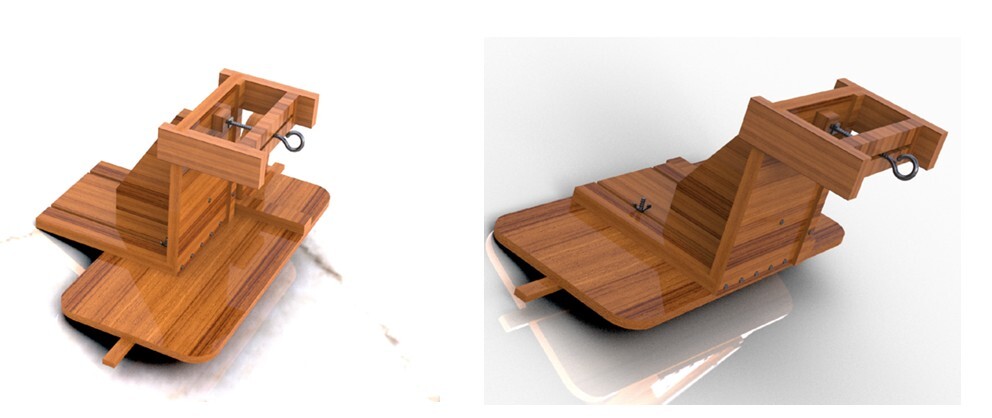
Experimental and Numerical Investigation of Failure Modes and Performance Behaviour of an All-purpose Jig on a Circular Saw Machine
1
Department of Wood Products Engineering, University of Cross River State, Calabar, Nigeria., Nigeria
Submission date: 2025-09-19
Final revision date: 2025-11-14
Acceptance date: 2025-12-03
Online publication date: 2026-11-26
Corresponding author
Asibong Asibong Icha
Department of Wood Products Engineering, University of Cross River State, Calabar, Nigeria., Calabar, PMB 1123, Calabar, Nigeria
Department of Wood Products Engineering, University of Cross River State, Calabar, Nigeria., Calabar, PMB 1123, Calabar, Nigeria

KEYWORDS
TOPICS
- wood mechanical and chemical technology, inter alia, sawmilling, composite wood products, wooden construction, furniture making, wood pulp, paper making
- material engineering, biocomposites, nanocomposites
- environmental protection, safety of the processes, products and working stations
- forestry: harvesting and wood quality
ABSTRACT
The need to improve the versatility of circular saw machines, especially in developing countries, remains a top priority. To address this issue, all-purpose jigs have been proposed as a potential solution. Consequently, an All-purpose Jig (APJ) for circular saw operations was developed and evaluated structurally using both experimental and numerical methods in this study. The APJ allows the circular saw to perform cutting tasks such as tongues, grooves, tenons, and moulding-head returns while increasing safety and enhancing precision—the APJ consists of a base, vertical fence, carriage/slider, clamp block, and handle. The model and simulation were carried out using SolidWorks (2021) to examine von Mises stress, elastic strain, and total deformation. Two materials, medium-density fibreboard (MDF) and African Mahogany (Khaya ivorensis), were considered in the simulation. Following this, a hybrid jig was fabricated by combining Mahogany and MDF. The jig was also empirically tested. Simulation results for MDF under a 470 N load showed a maximum von Mises stress of 1.494 x 10⁸ N/m2, elastic strain of 2.722 x 101, deformation of 1.659 x 104 mm and FoS of 2 respectively, while Mahogany under the same load recorded a maximum von Mises stress of 1.130 x 10⁷ N/m2, elastic strain of 1.338 x 10⁻⁴, deformation of 0.105 mm and FoS of 12, confirming superior strength and rigidity. The APJ offers cost-effectiveness with an estimated manufacturing cost of US$40.89 as of 2021. The combination of Mahogany and MDF demonstrates a practical pathway for optimising structural performance and enhancing safety in woodworking operations.
| eISSN: | 2956-9141 |

We process personal data collected when visiting the website. The function of obtaining information about users and their behavior is carried out by voluntarily entered information in forms and saving cookies in end devices. Data, including cookies, are used to provide services, improve the user experience and to analyze the traffic in accordance with the Privacy policy. Data are also collected and processed by Google Analytics tool (more).
You can change cookies settings in your browser. Restricted use of cookies in the browser configuration may affect some functionalities of the website.
You can change cookies settings in your browser. Restricted use of cookies in the browser configuration may affect some functionalities of the website.