Current Issue
Archive
Online First
Instructions for Authors
Guide for Authors
Peer Review Policy
Research Ethics Policy
Crossmark Policy
Ghostwriting and Guest Authorship
Copyright
Open Access Policy
Plagiarism
About the Journal
Aim and Scope
Publisher
Editorial Board
Indexing in databases
Personal Data Protection
Repository Policy
AI Policy
Contact


REVIEW PAPER
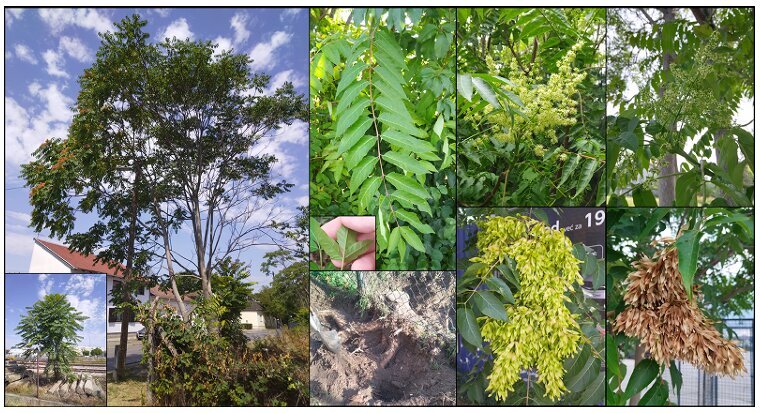
Managing the invasive tree-of-heaven (Ailanthus altissima (Mill.) Swingle) in forest ecosystems: an adaptive, integrated approach to ecological complexity
1
Department of Forest Utilization and Forest Techniques, Faculty of Forestry, University of Agriculture in Krakow, Poland
2
Department of Phytomedicine, Faculty of Agrobiotechnical Sciences Osijek, Josip Juraj Strossmayer University of Osijek, Croatia
3
Department of Agroecology and Plant Production, Faculty of Agriculture and Economics, University of Agriculture in Krakow, Poland
4
Department of Production Engineering, Logistics and Applied Computer Science, Faculty of Production and Power Engineering, University of Agriculture in Krakow, Poland
Submission date: 2025-08-08
Final revision date: 2025-11-19
Acceptance date: 2025-11-19
Online publication date: 2026-05-26
Publication date: 2026-07-28
Corresponding author
Marin Lukačević
Department of Forest Utilization and Forest Techniques, Faculty of Forestry, University of Agriculture in Krakow, al. 29 Listopada 46, 31-425, Kraków, Poland
Department of Forest Utilization and Forest Techniques, Faculty of Forestry, University of Agriculture in Krakow, al. 29 Listopada 46, 31-425, Kraków, Poland
Drewno 2026;69(218)

KEYWORDS
Ailanthus altissimatree-of-heavenforest ecosystemscontrol decision matrixintegrated management framework
TOPICS
ABSTRACT
The tree-of-heaven (Ailanthus altissima (Mill.) Swingle) is one of the most aggressive arboreal invaders, threatening forest health and biodiversity across five continents. Given its rapid spread, severe ecological impact, and management difficulty, this paper (i) synthesises current knowledge of ecological factors driving its invasion in forest settings, (ii) critically evaluates available control methods, and (iii) proposes an integrated, evidence–based management framework suitable for forest ecosystems. Prevention strategies, such as legislation, vigilant monitoring, and the rapid removal of female trees, are essential first–line defences. For control, systemic herbicides applied via foliar sprays, basal bark, cut–stump, or stem injection methods provide the most effective long–term suppression. In contrast, mechanical or physical treatments alone often result in vigorous resprouting. Biological control agents show potential but remain purely experimental. However, the absence of approved biological agents and the limited availability of long–term cost–effectiveness data currently constrain management planning and large–scale implementation in forest ecosystems. This review presents a decision matrix that links control options to tree ontogenetic stages and site conditions, highlighting research needs that balance effectiveness, costs, and ecological safety. Overall, this synthesis offers a clear, evidence–based toolkit for managers and policymakers managing A. altissima in forest ecosystems.
| eISSN: | 2956-9141 |

We process personal data collected when visiting the website. The function of obtaining information about users and their behavior is carried out by voluntarily entered information in forms and saving cookies in end devices. Data, including cookies, are used to provide services, improve the user experience and to analyze the traffic in accordance with the Privacy policy. Data are also collected and processed by Google Analytics tool (more).
You can change cookies settings in your browser. Restricted use of cookies in the browser configuration may affect some functionalities of the website.
You can change cookies settings in your browser. Restricted use of cookies in the browser configuration may affect some functionalities of the website.