Current Issue
Archive
Online First
Instructions for Authors
Guide for Authors
Peer Review Policy
Research Ethics Policy
Crossmark Policy
Ghostwriting and Guest Authorship
Copyright
Open Access Policy
Plagiarism
About the Journal
Aim and Scope
Publisher
Editorial Board
Indexing in databases
Personal Data Protection
Repository Policy
AI Policy
Contact


ORIGINAL PAPER
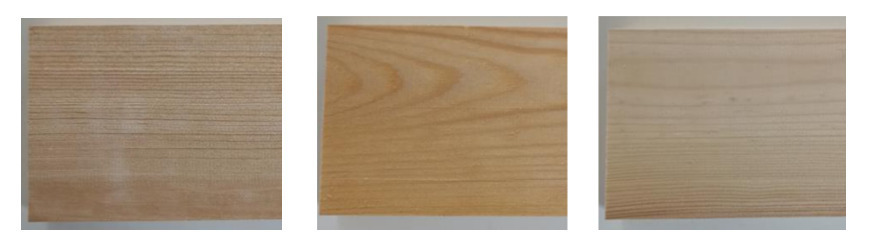
Corrigendum of Durability of the fire protection impregnation and its impact on selected properties of Scots pine wood
1
B+R, Polskie Domy Drewniane S. A.
Publication date: 2026-11-12
Drewno 2025;68(216)
RELATED ARTICLE
REFERENCES (20)
1.
Babiński L. [1992]: Impregnacja drewna metodą ciśnieniowo-próżniową, Ochrona zabytków 45/4 (179), 360-368.
2.
Bao F., Lu J., Avramidis S. [1999]: On the permeability of main wood species in China.
4.
Bendtsen B.A. [2009]: Sorption and swelling characteristics of salt-treated wood. U.S. Forest Product Laboratory (60) 2-5, Digital version.
5.
Brazier J. D., Laidlaw R.A. [1974]: The implications of using inorganic salt flame-retardant treatments with timber. BRE Information IS 13/74. In News of Timber Res. Princes Risborough Lab., Aylesbury, Buckinghamshire.
6.
De Angelis, M et all [2022]. Influence of Thermal Modification and Impregnation with Biocides on Physical Properties of Italian Stone Pine Wood (Pinus pinea L.). Appl. Sci. 2022, 12, 3801. DOI:10.3390/app12083801.
7.
EAD 350140-00-1106 [2017]: Renderings and rendering kits intended for fire resisting applications, EOTA.
10.
Keskin H. [2009]: Impact of impregnation chemical on the bending strength of solid and laminated wood materials. Mater Des 30:796–803. DOI:10.1016/j.matdes.2008.05.043.
12.
Krajewski A., Witomski P. [2003]: Ochrona drewna surowca i materiału. Warszawa: SGGW.
14.
Östman B., Tsantaridis L.D. [2017]: Durability of the reaction to fire performance of fire-retardant-treated wood products in exterior applications – a 10-year report International Wood Products Journal. London, SAGE 8, 1-7. DOI:10.1080/20426445.2017.1330229.
15.
PN-EN 14080:2013-07 [2013]: Timber structures. Glued laminated timber and glued solid timber. Requirements.
16.
Su S., Ahmed S. [2006]: Permeability and meniscus phenomenon in four Korean softwood species. For Stud China 8:56–60.
17.
U.S. Forest Products Laboratory [1974]: "Wood handbook: Wood as an engineering material." pp. 15-10, 15-11. U.S.D.A. Agric. Handb. No. 72, (rev).
18.
Wang Q., Wang W., Winandy J. [2005]: Effects of a new GUP-B fire retardant on mechanical properties of Korean pine when exposed to elevated temperature. Forest Prod J 55:214–220.
19.
Ważny J., Karyś J. [2001]: Ochrona budynków przed korozja biologiczną, Arkady Warszawa, 356-358.
20.
Winandy J. [2001]: Thermal degradation of fire-retardant-treated wood: predicting residual service life. Forest Prod J 51:47.
| eISSN: | 2956-9141 |

We process personal data collected when visiting the website. The function of obtaining information about users and their behavior is carried out by voluntarily entered information in forms and saving cookies in end devices. Data, including cookies, are used to provide services, improve the user experience and to analyze the traffic in accordance with the Privacy policy. Data are also collected and processed by Google Analytics tool (more).
You can change cookies settings in your browser. Restricted use of cookies in the browser configuration may affect some functionalities of the website.
You can change cookies settings in your browser. Restricted use of cookies in the browser configuration may affect some functionalities of the website.